

In a world where deepfake video calls can deceive anyone, protecting our loved ones is more than just a technical challenge—it’s a personal mission. Understanding how to verify these calls ensures you’re truly connecting with family, keeping trust alive and safeguarding your most precious relationships.

With the dramatic rise in deepfake scams powered by artificial intelligence (AI) and sophisticated voice cloning, the security of video calls among family members faces urgent threats.
In 2026, learning how to verify deepfake video calls from family members has become essential for protecting your privacy, preventing identity theft, and ensuring your family's digital trust. This comprehensive guide gives you reliable, step-by-step methods to spot and counter deepfake scams so you can stay connected and safe in an AI-driven world.
“Scammers can now create realistic fake faces and voices to mask their own in real time.” — Cybersecurity expert, quoted by WIRED
Why Verifying Deepfake Video Calls from Family Members Matters
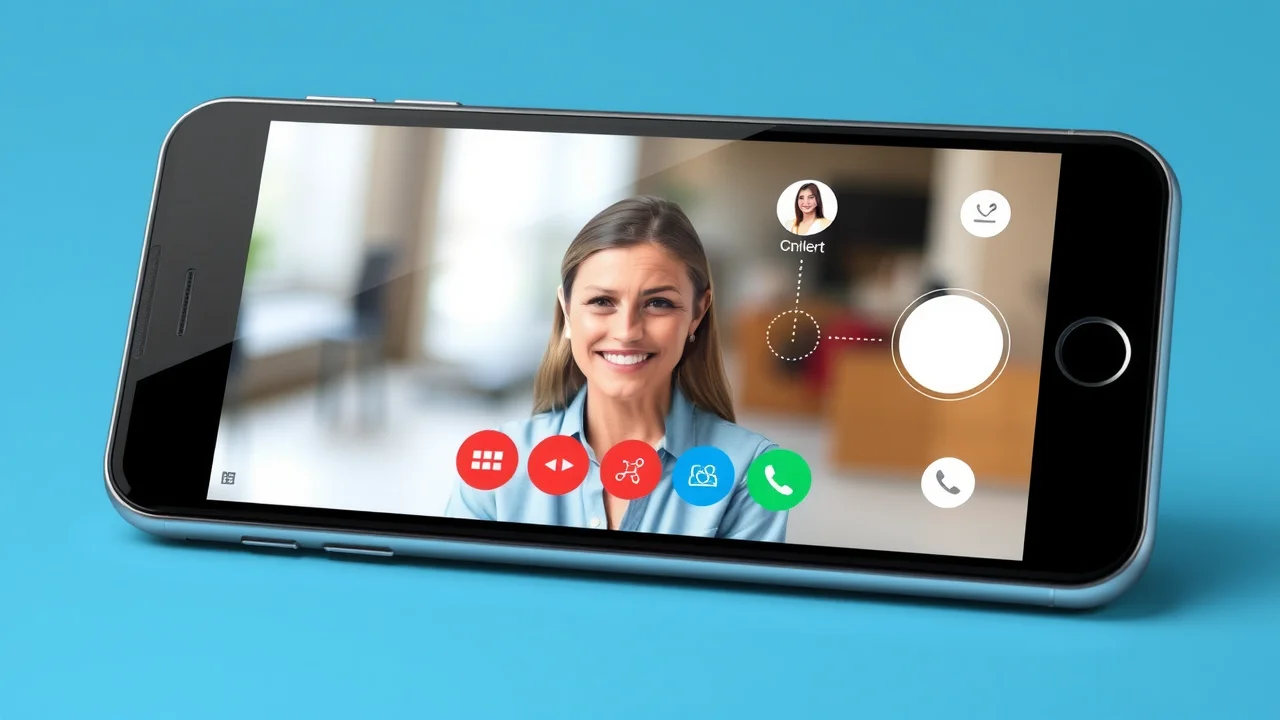
The emergence of convincing deepfake video and AI voice technologies has significantly changed digital communication. While enabling easier connections, these developments have also ushered in a new era of deepfake scams that target families. Scammers exploit video call platforms, impersonating loved ones with audio or video that’s nearly indistinguishable from the real thing.
This puts your family’s personal information, finances, and emotional security at risk. Failure to verify the authenticity of a video call from a family member can result in fraudulent requests for wire transfers or the theft of sensitive information—making the stakes alarmingly high in 2026.
Cybercriminals are continually refining their approaches, often using social engineering—the art of manipulating trust to steal personal data. Deepfake video calls present a powerful tool in the hands of malicious actors. Understanding the red flag signs of a fake video or voice scam, and learning how to act decisively in real time, ensures your connections remain genuine and you stay one step ahead of identity theft tactics. Verifying deepfake video calls is not just about technical savvy—it's about empowering your family with essential security awareness in a changing digital landscape.
What You'll Learn About How to Verify Deepfake Video Calls from Family Members
Key threats deepfake scams pose in 2026
Advanced warning signs of a fake video
Step-by-step methods for deepfake video call verification
The influence of artificial intelligence and AI voice technologies
Best practices for safeguarding against deepfake scams

The Evolution of Deepfake Video Calls and Artificial Intelligence
From Simple Manipulation to Advanced Deepfake Scams
Years ago, simple video manipulation involved basic editing tricks and obvious audio dubs. Fast-forward to 2026, and deepfake scams now leverage cutting-edge artificial intelligence to create AI voice and fake video content so advanced it can easily deceive even digitally savvy people.
Video calls, once a trusted means of staying close, are now common targets for scammers wielding AI-powered voice cloning and video deepfake technology. This evolution means that visual and auditory cues—once reliable markers of authenticity—can no longer be trusted at face value.
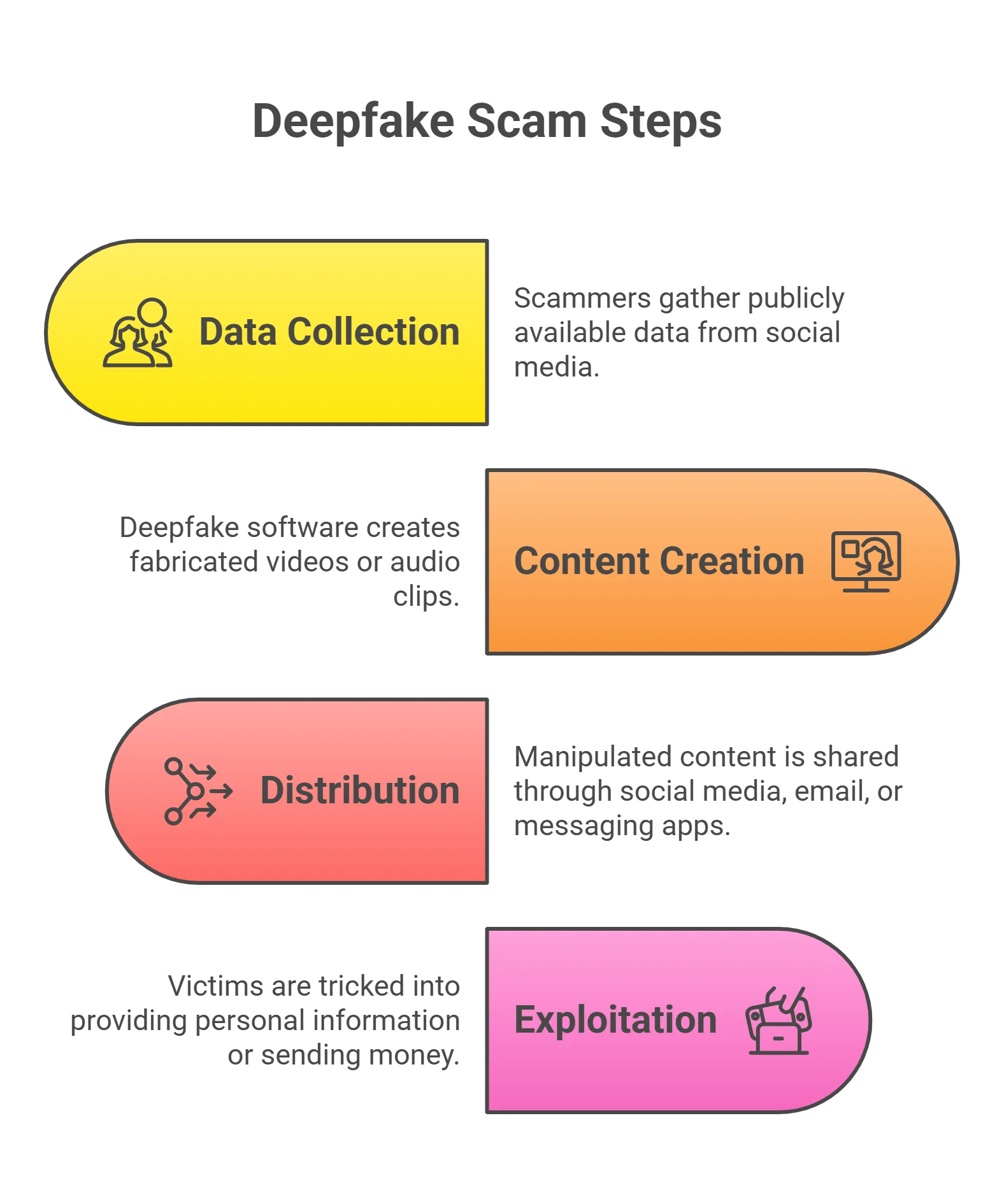
Today’s deepfake video calls use neural networks to model face movements and replicate a person's speech patterns, gestures, and tics. Using personal information found on social media or previous video calls, malicious actors can fabricate highly persuasive video deepfakes that challenge our ability to spot a deepfake.
With easy access to AI voice and video call software, a scammer can create convincing impersonations of your family members, raising the risk of identity theft, wire transfer fraud, and emotional manipulation through fake video or voice scams.
Role of Artificial Intelligence and AI Voice in Video Calls
Artificial intelligence and AI voice cloning algorithms are driving forces behind the most convincing deepfakes. These systems, trained on enormous datasets of audio or video, learn to simulate practically anyone’s likeness in a video call. As a result, a deepfake scam can now involve not just a face, but also a perfectly matched, cloned voice that even close family members might find hard to recognize as fake. AI voice systems can replicate inflection, emotion, and speech cadence, making real-time voice scams increasingly common and harder to detect.
With cloud-based delivery and open-source platforms for voice cloning, anyone with basic technical skills can now attempt to stage a convincing deepfake video call. This democratization of AI has increased the incidence of deepfake scams targeting family members, friends, and businesses alike. In these scenarios, reliance on just visual authentication or recognizing a familiar voice is no longer enough—families must embrace layered security strategies to outpace rapidly advancing artificial intelligence threats.
As you strengthen your defenses against deepfake video call scams, it's equally important to consider your overall digital privacy habits. For a deeper dive into practical steps that enhance your online safety and reduce exposure to emerging threats, explore the actionable advice in the ultimate guide to online privacy protection. Integrating these privacy strategies can further minimize the risk of personal data being used in deepfake attacks.
Identifying Red Flags in Deepfake Video Calls from Family Members
Common Red Flag Indicators of a Deepfake Scam
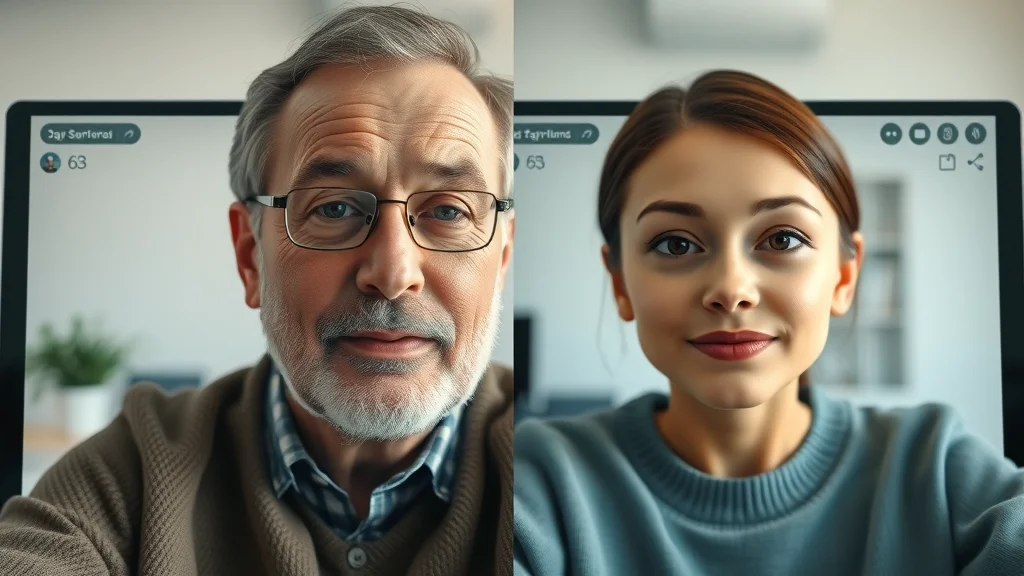
Spotting a deepfake scam during a video call requires close attention to details that may seem out of place. Warning signs often include unusual speech patterns or delays due to AI voice glitches, low-quality or lagging video with fake video inconsistencies, and unexpected requests for sensitive information. Since deepfake video calls depend on both visuals and audio, inconsistencies between lip movement and voice, robotic or emotionless tone, or odd pauses can indicate the use of AI voice cloning.
Other common red flag behaviors may involve background discrepancies—such as an unfamiliar room behind your supposed family member—or awkward gestures that appear unnatural. If the caller urges you to keep the conversation secret, shows an atypical urgency to secure a wire transfer, or asks for private personal info, it’s vital to hit pause and start the verification process immediately. Real family members rarely pressure you for urgent action via unfamiliar channels, especially through newly found social media contacts or unexplained phone numbers.
Unusual speech patterns or delays (AI voice anomalies)
Low-quality or lagging video (fake video inconsistencies)
Unexpected requests for sensitive information
Suspicious Behavior and Social Engineering Tactics
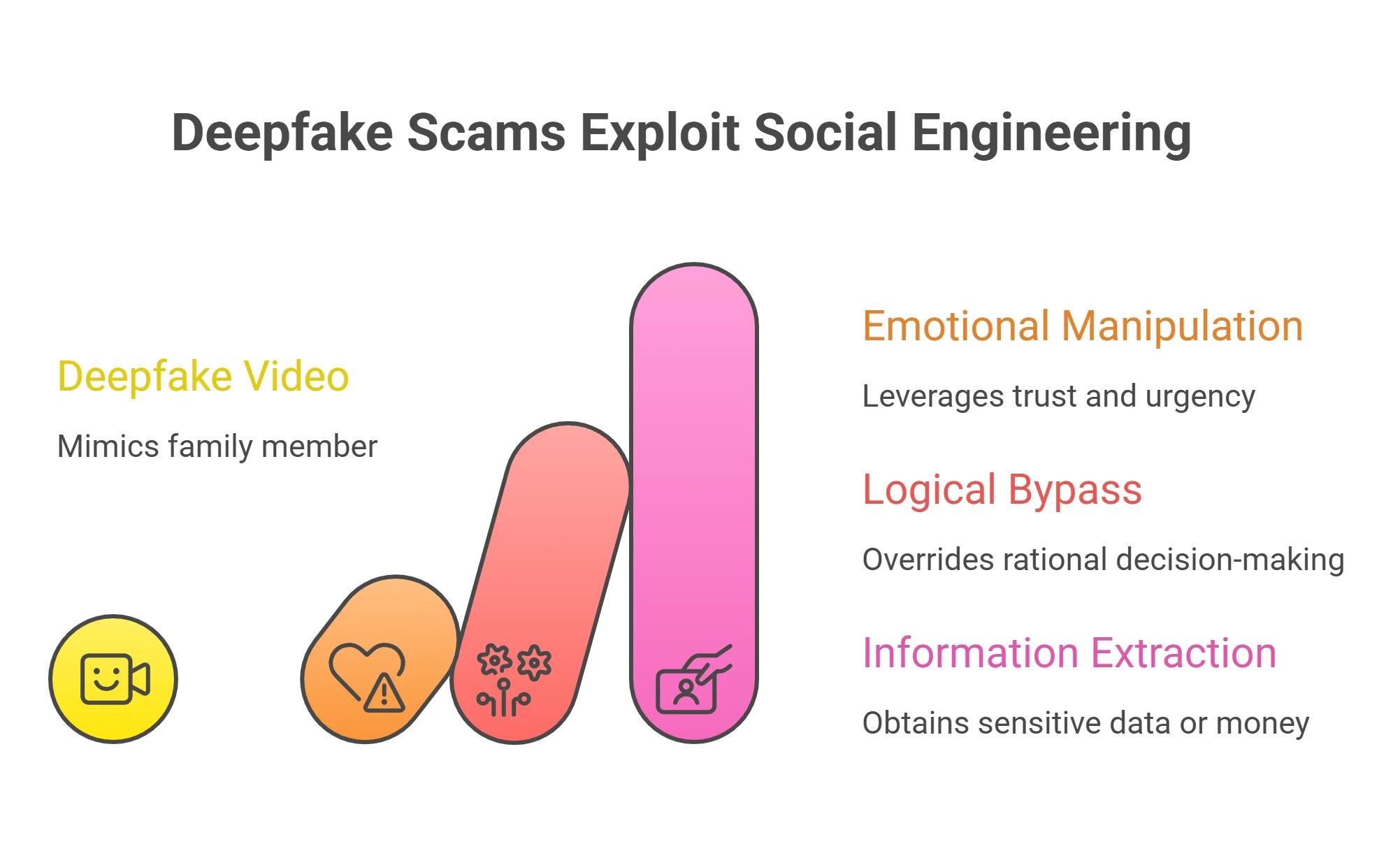
Scammers exploiting deepfake video call technology often rely on social engineering to manipulate their targets emotionally or psychologically. By mimicking a family member’s distress or urgency, attackers attempt to bypass logical decision-making and leverage your trust. Watch out for callers who rush you, claim emergencies, or try to evoke fear, guilt, or excitement to extract sensitive information or money. Such tactics manipulate human nature, making you more prone to overlook technical red flag indicators.
Social engineering isn’t limited to emotion-based ploys. Attackers may piece together personal details from previous conversations, emails, or social media, making the deepfake scam even more believable. They’ll use plausible stories that match your recent life events or reference mutual contacts to encourage compliance. By staying alert to both technical and psychological signs, you’ll be far more prepared to thwart attempts at identity theft, financial fraud, and voice scams during fake video calls.
“The deepfake (voice call or video) builds credibility, making it easier to manipulate the victim into taking action, such as sharing sensitive information, approving payments, or sending money.” — ExpressVPN security analysis
Step-by-Step: How to Verify Deepfake Video Calls from Family Members
Live Authentication Techniques During a Video Call
When a suspicious video call comes through, act immediately to confirm your family member’s identity. Ask spontaneous, personal questions—choose topics only your real relative would know about, such as childhood memories or inside jokes. During the call, request specific gestures or actions (“Please touch your left ear” or “Show me your favorite mug in the room”) to test the real-time capability of the video stream. AI-generated fake video struggles with live, unpredictable movement and on-demand physical interaction.
In addition, observe the background details: is the setting consistent with your knowledge about where your family member is supposed to be? If you spot inconsistencies, such as new furniture or missing family photos, this could signal a fake video. Keep the conversation going just long enough to ask questions that are hard to pre-fabricate. Once you detect any misalignment or hesitation, don’t share sensitive information and end the call if conversation becomes suspiciously evasive or forceful.
Ask spontaneous, personal questions
Request specific gestures or actions
Verify unique background details

Technical Tools for Deepfake Scam Detection
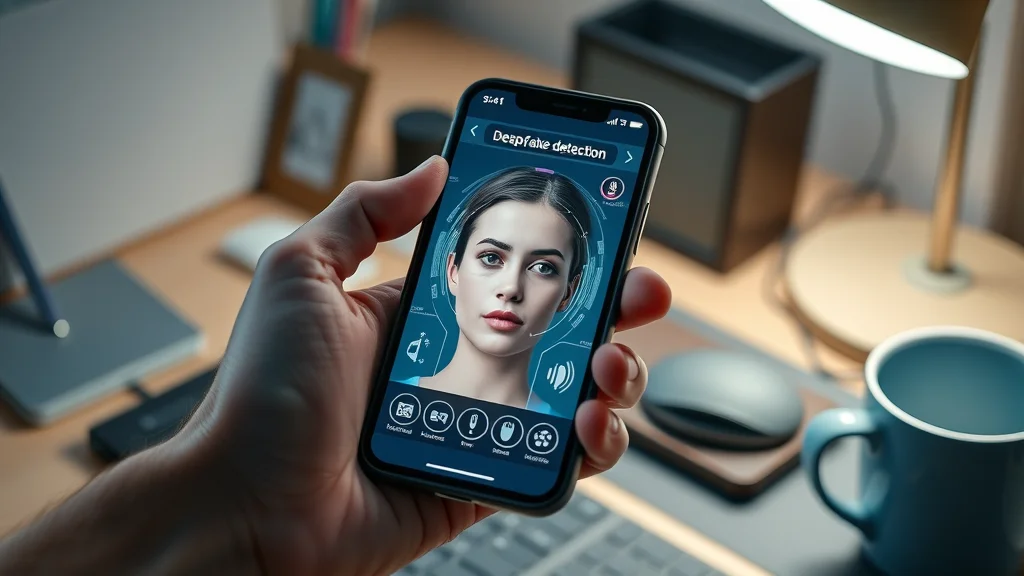
Technology can be your ally in the fight against deepfake scams. Leverage face and voice recognition apps that analyze video and audio characteristics to spot evidence of AI manipulation. Real-time deepfake analysis tools scan for inconsistencies, such as unnatural blinking, lip-sync errors, or voice modulation.
These technical solutions help you catch the subtle differences between a real video call and a fake one—especially if you’re unsure about your own ability to spot a deepfake using intuition alone.
For the most secure verification, use encrypted identity verification methods. Many families now use secure codes, passwords, or visual tokens—like holding up a particular object—to confirm each other's identity during an urgent or unexpected call. Update these methods frequently and keep them private. Combining technical detection tools with personal knowledge makes it much harder for scammers to stage a convincing deepfake video call that leads to fraud or identity theft.
Face and voice recognition apps
Real-time deepfake analysis tools
Encrypted identity verification methods
Cross-verifying with Voice Clone and Voice Cloning Evidence
One advanced verification step is to cross-verify suspicious calls using past voice recordings or video clips of your family members. AI-powered voice cloning has reached a point where cloned voice and video are alarmingly convincing; therefore, creating a library of genuine, authenticated voice samples can make identifying manipulated content easier.
If you suspect you’re witnessing a voice clone during a call, compare the speech patterns, pauses, and emotional tone with previously recorded conversations. Deepfake technology still struggles to replicate true human emotion and improvisation, especially if tested with familiar jokes or playful banter unique to your relationship.
In some families, using safe words, phrases, or repeated questions across different platforms (such as following up a video call with a phone call or an encrypted text message) can throw off a scammer using AI voice alone. The aim is to establish multi-layered checks that combine smart use of technology with personal intuition—every layer making it harder for voice scams and deepfake attacks to succeed.
“It’s important to note that these scams are not limited to traditional voice calls. They can be carried out over apps like WhatsApp and even increasingly on video call apps like Zoom.” — University of Florida Information Technology
The Science Behind Deepfake Video and AI Voice Technologies
How Deepfake Video and Fake Video Manipulation Operate
Deepfake video utilizes machine learning models—often called generative adversarial networks (GANs)—to map a person’s face and mimic expressions in real time by blending or “swapping” it onto another body. Similarly, AI voice techniques employ deep neural networks to analyze hours of someone’s speech, learning accents, and micro-inflections.
The system can then produce artificial, highly realistic audio and video—arming scammers with both tools for a highly convincing deepfake scam. The integration of these AI-powered cloning techniques into video calls is what allows scammers to trick family members into believing urgent requests, risking both personal data and emotional well-being.
The alarming part is how accessible and scalable these tools have become. With just a few minutes of your public-facing audio or video—maybe from social media or a voice message—a malicious actor can build a convincing deepfake using open-source AI voice or video platforms. This underlines the need for robust security awareness and ongoing vigilance every time you answer a family video call you weren’t expecting.
Limitations of Current Deepfake Video Call Detection Tools
Despite ongoing advances, even the best deepfake detection apps and real-time analysis tools are not foolproof. As the technology behind deepfake video calls becomes more refined, distinguishing real from fake is a race between attackers and defenders. Video deepfake artifacts are becoming less common, and voice cloning tools are better at imitating inflection and timing. Most technical tools catch only the less sophisticated attempts, so combining them with personal verification is crucial for effective protection.
Regularly educate your family on the limitations of these tools, and avoid relying solely on automated detection. Instead, balance technical defenses with critical thinking, knowledge of each other’s habits, and the best practices outlined in this guide. This human-plus-technology approach ensures you recognize the subtle cues deepfake scams still can’t fake—yet.
Best Practices: Protecting Yourself and Family from Deepfake Scams
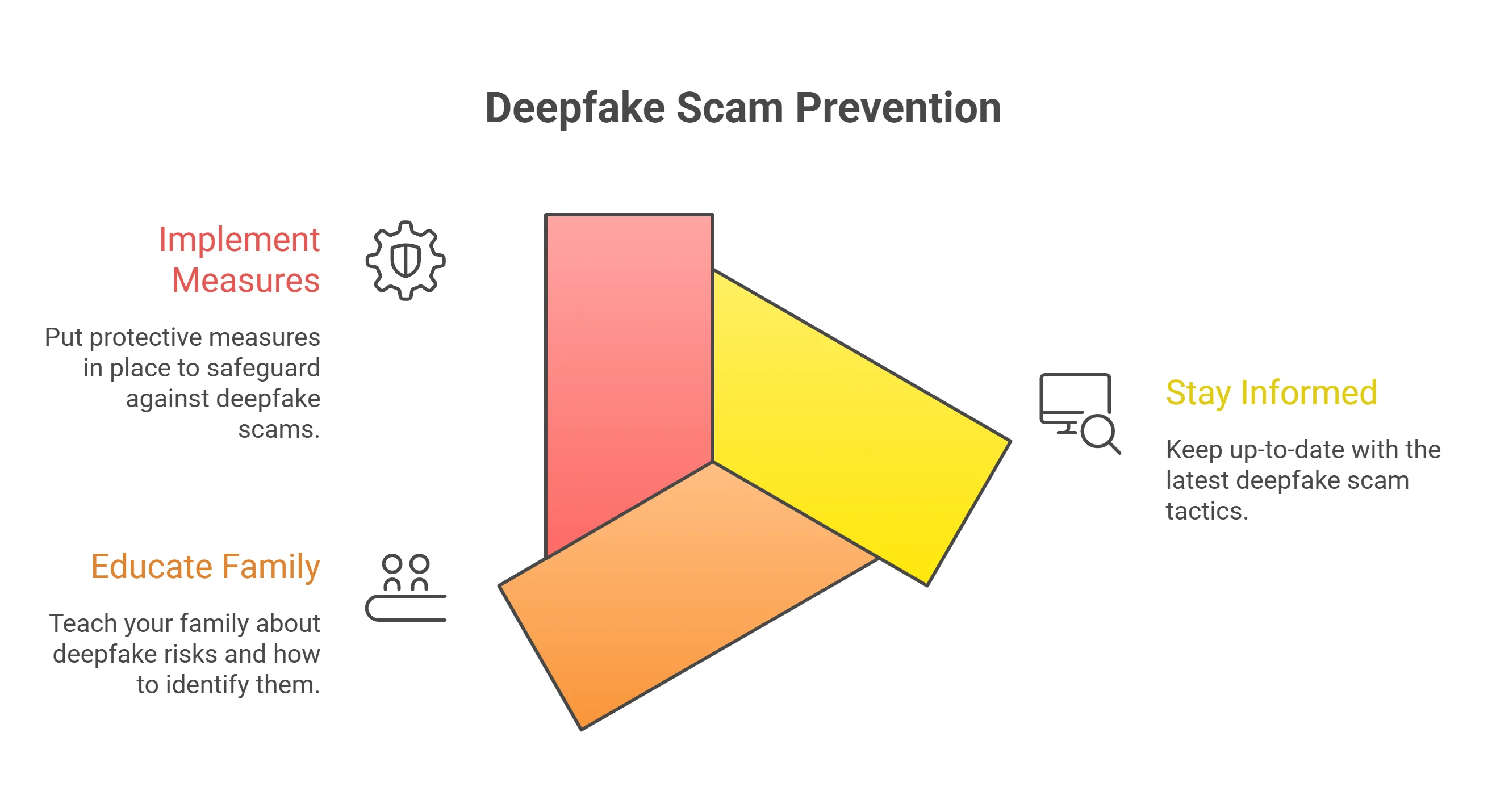
Educate family about deepfake scam risks
Establish secret codes for urgent situations
Regularly update privacy settings
Make time to regularly talk with family members about the risks of deepfake scams. Share tips about what to watch out for, and run practice drills so everyone’s ready to respond to a suspicious video call. Establishing secret verification codes ensures that if you're ever asked for a wire transfer, personal info, or other sensitive information via call, you can confirm with a trusted family-specific question or phrase.
Don’t forget to update social media privacy settings and limit the public sharing of audio or video, which can be exploited for voice cloning or deepfake video manipulation. Consider setting up a family protocol: “If you ever get a scary or urgent video call, confirm the person's identity using a second channel or a pre-agreed code. ”

Common Social Engineering Tactics in Deepfake Video Calls
Why Family Members Are Targeted via Deepfake Video Calls
Family relationships are a prime target for social engineering tactics used in deepfake scams. Scammers know that urgency, love, or worry can bypass logic—especially when combined with a convincing deepfake video or AI voice call. They use emotional manipulation, urgency (“I need money now!”), and the impersonation of trusted voices to trick you into revealing sensitive information, transferring money, or letting your guard down. Making security awareness a habit is crucial for every member of your family, from teens to elderly relatives.
Emotional manipulation
Urgency and pressure
Impersonation of trusted voices
Case Studies: Real-World Examples of Deepfake Scams Using Video Calls
Incident 1: Targeted attack on elderly family member using AI voice and video call. An elderly grandparent receives an urgent fake video call from a supposed relative requesting help with a fictitious emergency. The AI-generated video and cloned voice are so realistic that the family member nearly transfers funds before realizing small speech hesitations and inconsistent background details—classic red flag indicators of a deepfake scam.
Incident 2: Fake video used to request emergency funds. A parent receives a late-night video call from their "child," frantically asking for a wire transfer for a medical bill. The emotional tone is high, but a quick check with a family code through a separate phone call reveals the scam.

Verification Method |
Effectiveness |
Ease of Use |
Best for |
|---|---|---|---|
Live question tests |
High |
Easy |
Most users |
Deepfake detection apps |
Moderate |
Medium |
Tech users |
Secure family codes |
Very High |
Easy |
Families with children |
Expert Insights: Staying Ahead of Deepfake Video Call Threats
"Continuous education on artificial intelligence and emerging deepfake threats is vital to maintaining digital trust and safety within the family unit."

How to Detect Deepfake Video Calls?
Answer
Detecting deepfake video calls from family members requires vigilance for red flag behaviors, use of real-time verification methods, and leveraging deepfake scam detection tools. Watch for unnatural facial expressions, poor video quality, and unexpected requests as initial indicators.
Can Deepfake Audio Be Detected?
Answer
Deepfake audio, often created with AI voice or voice cloning, can be detected using specialized software that analyzes voice anomalies and acoustic patterns, along with contextual awareness about your family member’s typical speech.
Is It Possible for Someone to Fake a Video Call?
Answer
Yes, artificial intelligence now makes it possible for scammers to produce highly realistic fake video calls that mimic your family member’s likeness and voice. Adopting layered verification steps for every unexpected or urgent video call is crucial.
How to Detect Deepfake Voices?
Answer
Detect deepfake voices by listening for unusual inflections, robotic tones, or lack of emotional depth. Combine active listening with voice recognition and compare with known voice samples whenever in doubt.
FAQs on How to Verify Deepfake Video Calls from Family Members
What are the main signs of a fake video or deepfake video call?
Look for mismatched lip movements, odd pauses, robotic tones, and requests for secrecy or urgent action. Small visual or audio anomalies are often present in deepfake scams.How frequently should family safety protocols be updated?
Review your safety codes, privacy settings, and detection tools every few months, or whenever new threats are reported in the media.Are free deepfake detection apps reliable?
While some apps provide basic protection, they may not catch the most sophisticated scams. Use them as part of a broader verification strategy, not as your only defense.What is the role of social engineering in deepfake scams?
Scammers use psychological tricks and emotional manipulation along with technology to bypass your natural skepticism.How to educate elderly family members about deepfake video calls?
Run simple practice sessions. Teach them to pause when unsure and call another family member to confirm before acting on urgent requests.
Key Takeaways for Verifying Deepfake Video Calls from Family Members
Deepfake scams are a growing risk, especially targeting families via video calls.
Detection requires technical awareness and personal verification steps.
Education and regular communication are key defenses.
Leveraging both human intuition and AI-based tools is essential.
Stay Secure: Next Steps to Protect Your Family from Deepfake Video Call Scams
For ongoing updates, best tools, and proactive protection strategies, visit PersonalSafetyPrep.com - Your Trusted Source.
Conclusion
Take a layered approach to verification, regularly update your knowledge, and foster open communication to protect your family from the evolving threat of deepfake video call scams.
Staying ahead of deepfake threats means thinking beyond just video calls—your entire digital footprint matters. If you’re ready to elevate your family’s security posture, consider exploring comprehensive privacy strategies that address everything from password hygiene to safe browsing habits.
The insights in Click Smarter, Not Harder: The Ultimate Guide to Online Privacy Protection will empower you with advanced techniques to safeguard your identity and personal data across all online interactions. Take the next step and build a holistic defense that keeps your loved ones secure in every corner of the digital world.
Sources
Wired – https://www.wired.com/story/deepfake-scams-guidance-2026/
CISA – https://www.cisa.gov/resources-tools/resources/deepfakes-and-synthetic-media
Federal Trade Commission – https://www.consumer.ftc.gov/articles/how-spot-avoid-common-scams
In today’s digital landscape, the threat of deepfake video calls has become increasingly sophisticated, making it essential to verify the authenticity of communications from family members. To enhance your understanding and protective measures, consider exploring the following authoritative resources:
“BBB Tip: How to Spot a Deepfake and Avoid Scams” (bbb. org) This guide from the Better Business Bureau offers practical advice on identifying deepfake videos and audio, highlighting common signs such as unnatural facial movements and audio inconsistencies.
“How to Detect Deepfake Videos Like a Fact-Checker” (politifact. com) Published by PolitiFact, this article provides insights into the techniques used by fact-checkers to spot deepfakes, including tips on analyzing video and audio for authenticity.
By delving into these resources, you can equip yourself with the knowledge and tools necessary to safeguard your family against the evolving threat of deepfake video call scams.


Write A Comment